What Areas Can Fotona 4D Laser Facial (TimeWalker) Treat?
Patients rarely come in asking for a laser because they want “full-face rejuvenation” in the abstract. They usually point to something specific. The lines around the mouth that suddenly show up in lipstick. The softening jawline that looks different in side-profile photos. The under-eye area that seems tired even after a good week of sleep. Sometimes it is the neck, which tends to reveal texture changes and creasing earlier than people expect. Sometimes it is acne scarring on the cheeks, or enlarged pores across the T-zone.
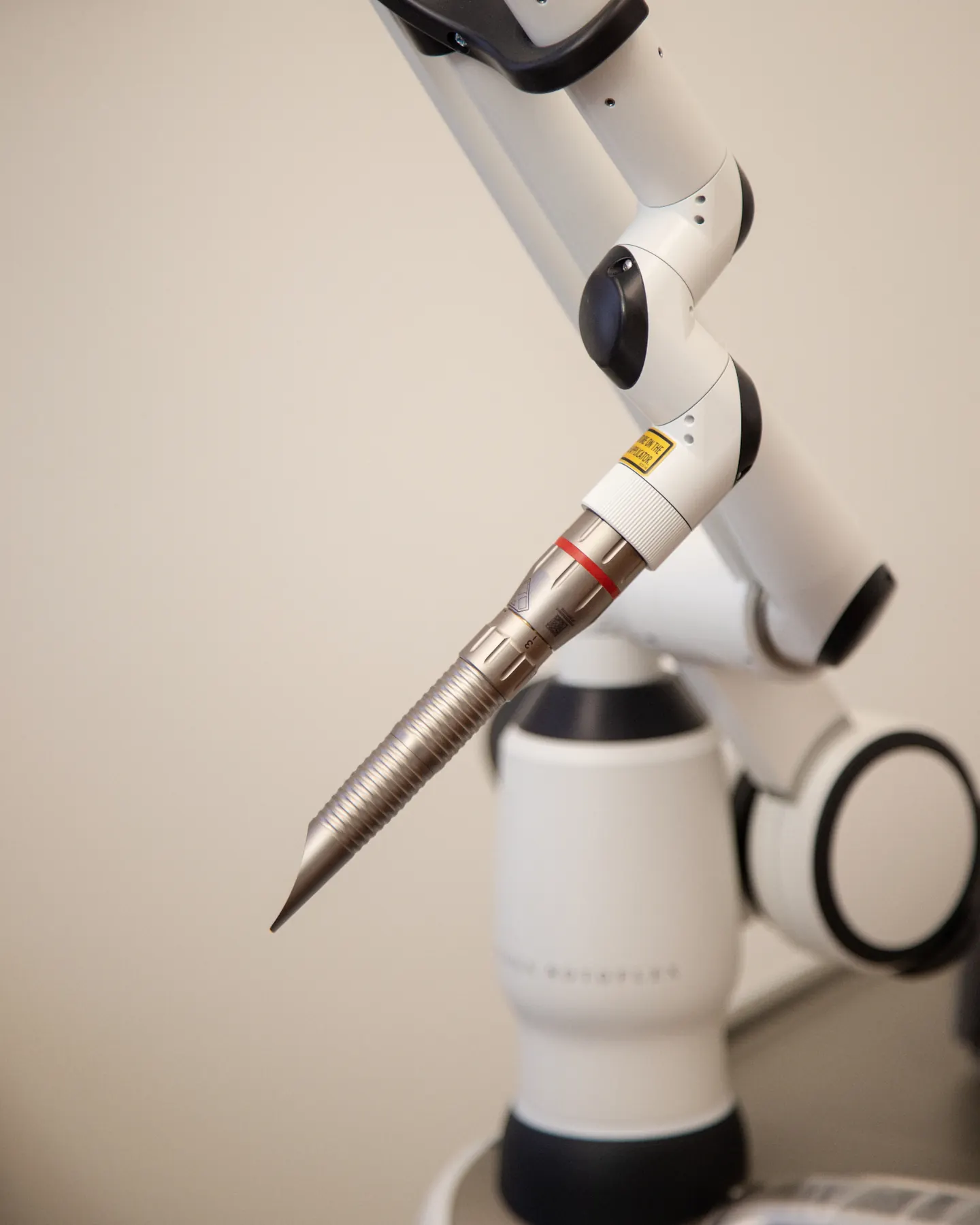
That is where the Fotona 4D Laser Facial (TimeWalker) tends to make sense as a treatment concept. It is not built around one single pass or one single problem. It combines several laser modes in a sequence designed to address different tissue depths and surface concerns in the same session. In practice, that means it can treat more than one area of the face, and it can do so with a degree of flexibility that many patients appreciate. A omniawellnesscenterencino.com Fotona 4D Laser Facial (TimeWalker) person bothered by perioral lines and mild skin laxity may be approached differently from someone whose main issue is rough texture and diffuse dullness.
The more useful question is not simply whether Fotona 4D can treat “the face,” but which facial and adjacent areas it is actually well suited for, what changes are realistic in each zone, and where judgment matters. Some areas respond beautifully. Some improve more gradually. Some need maintenance. And some concerns still call for injectables, surgery, or a completely different energy-based device.
Why area-specific treatment matters
The face does not age evenly. The skin around the eyes is thin and reactive. The cheeks can lose volume and elasticity at the same time. The mouth area often develops etched lines because of repetitive movement, sun exposure, and collagen decline. The jawline can blur partly from skin laxity and partly from deeper structural change. Treating every region with the same intensity, same depth, and same expectations is rarely the best Fotona 4D Laser Facial (TimeWalker) strategy.
Fotona 4D is often described in terms of its “four dimensions,” but what matters clinically is that it allows a provider to work from inside the mouth outward, then through deeper and more superficial layers of the skin. That versatility is the reason it gets used across multiple zones. The exact protocol depends on skin quality, sensitivity, goals, and downtime tolerance.
A patient in her late 30s with early textural change may respond well with a lighter course aimed at prevention and refinement. Someone in her 50s with established perioral wrinkling and cheek laxity may need a stronger series and more candid expectations. The treatment area influences all of that.
The area around the mouth is one of its strongest applications
If there is one zone that often stands out in real-world practice, it is the perioral area. This includes the upper lip, the lower lip border, the skin around the mouth, and the nasolabial region nearby. These tissues show aging early because they move constantly and because the skin here is prone to fine etched lines that topical skincare rarely changes in a meaningful way.
One reason the Fotona 4D Laser Facial (TimeWalker) is discussed so often for this area is the intraoral component. By treating from inside the mouth, the laser can target tissue in a way that supports tightening and collagen remodeling without breaking the surface in the same manner as more aggressive ablative treatments. Patients often describe the goal here as wanting the mouth to look “less collapsed” or “less crepey,” especially when lipstick starts to feather.
That does not mean the area becomes line-free. Deep smoker’s lines, even in non-smokers, can be stubborn. But the upper lip can look smoother, the lip contour can appear more defined, and the skin around the mouth often looks firmer and less tired. In milder cases, the change can be quite elegant. In more advanced cases, improvement is real but usually best when paired with other treatments, such as filler for support or neuromodulator for excessive muscular pull.
I have seen this area make patients unexpectedly happy because it affects small daily details. Lipstick applies better. Concealer settles less. The mouth looks less tense in relaxed expression. Those are subtle gains, but they matter.
Cheeks respond well when the goal is firmness, pores, and acne scarring
The cheeks carry a lot of the visual burden of facial aging. They can lose tautness, develop enlarged pores, show acne scarring, and become rough or uneven in tone. They are also a common place for patients to notice that “my skin just doesn’t reflect light the same way anymore.” That loss of bounce is hard to describe but easy to recognize.
Fotona 4D can be a useful option here because the cheeks tolerate multi-layer treatment well in many patients. Depending on settings and handpieces, the laser can address deeper tissue support and more superficial resurfacing. This makes the cheeks one of the most versatile treatment zones.
For texture and pores, the benefit is often gradual rather than dramatic after a single session. A series tends to matter more than a one-off treatment. For mild acne scars, especially shallow rolling irregularities and diffuse textural roughness, improvement can be noticeable. For deeper boxcar or tethered scars, expectations need to be tighter. Laser can soften edges and improve overall skin quality, but it may not replace subcision, stronger resurfacing, or combination protocols.
Cheek laxity is another common reason people ask about TimeWalker. The treatment can help with mild to moderate looseness, particularly when the issue is skin quality rather than significant descent of fat pads. Patients in their 40s and early 50s often fit this category. Once volume loss and tissue descent become dominant, laser alone has limits. The cheeks may look better, fresher, and somewhat tighter, but not lifted in a surgical sense.
The jawline and lower face are popular targets, with realistic limits
A softening jawline is one of the most emotionally charged concerns patients mention. Many notice it in phone photos before they see it in the mirror. They feel that the lower face looks heavier, even when their weight has not changed. The challenge is that “jawline definition” can be lost for different reasons: skin laxity, platysmal banding, deep fat, bone structure, or simple changes in light and posture.
Fotona 4D can help the skin component of that picture. In patients with mild lower-face laxity, it may improve tissue firmness enough to create a cleaner transition along the jaw. This tends to show best in people who still have underlying structure but are beginning to lose snap in the skin. It is less persuasive in someone with marked jowling or substantial submental fullness.
This is where good consultation matters. If a patient expects a laser facial to create a sharp, surgically defined mandibular line, disappointment is likely. If the aim is refinement, collagen support, and a more toned lower face, then the treatment can be a good fit.
An overlooked point is that the lower face often benefits from a combined plan. If the skin is lax and the chin is underprojected, laser may improve one part of the problem while leaving the overall silhouette only modestly changed. The result can still be worthwhile, but context matters.
The nasolabial folds can improve, though not always in the way patients expect
People often ask whether laser can “remove” smile lines. It is a fair question, but it usually needs reframing. Nasolabial folds are not just wrinkles in the skin. They are structural folds shaped by anatomy, expression, fat distribution, and tissue descent. Because of that, no non-surgical skin treatment reliably erases them.
What Fotona 4D can do is improve the skin over and around the fold, stimulate collagen, and mildly tighten adjacent tissue. In some patients, that softens the prominence of the fold. In others, the change is more indirect. The whole midface looks smoother and firmer, so the fold draws less attention even if it remains present.
This is a recurring pattern with laser facial rejuvenation. The best outcomes are often not about one line disappearing. They are about the face looking more coherent, more rested, and less texturally aged. Patients who understand that tend to be happiest.
The eye area can be treated carefully, especially for crepiness
The periocular region is delicate, but it is also one of the first places to show age. Fine lines at the outer corners, crepiness under the eyes, and mild lid laxity can all make a face look more tired than it feels. The TimeWalker platform is often considered for this area because of its precision and because some protocols can target superficial quality without requiring the downtime of more aggressive resurfacing.
That said, the eye area demands restraint. Skin type, sensitivity, and baseline dryness all matter. Over-treatment around the eyes is never a good trade. The goal is usually better texture, some tightening, and softening of fine lines, not a drastic transformation.
Patients with early crow’s feet and under-eye crepiness can do nicely, especially when they are not yet surgical candidates and do not want repeated injectables alone to carry the whole burden. For pronounced under-eye bags, strong lower lid laxity, or significant hooding, the treatment may polish the skin but not solve the structural issue. It can be part of a plan, not the whole answer.
Forehead and glabella treatment is possible, though not always the main event
The forehead and the area between the brows can be treated when texture, enlarged pores, sun damage, or mild laxity are part of the concern. Patients sometimes notice that their forehead skin becomes rougher or less reflective with age, even before lines deepen. Laser can help improve that quality.
Dynamic lines from repeated muscle movement are a different matter. Horizontal forehead lines and glabellar frown lines usually respond most directly to neuromodulator treatment. If the lines are etched into the skin, a laser-based approach may soften them, but it generally works best as a complement. The distinction between movement-driven wrinkles and texture-driven aging matters here.
In practice, when the forehead is included, it is often part of broader full-face harmonization rather than the sole treatment focus.
The neck is often treated, and it is frequently worth including
One of the most practical decisions in facial rejuvenation is whether to stop at the jawline. From an aesthetic standpoint, that rarely makes sense. The neck can age faster than the midface, especially in people with sun exposure, tech-neck creasing, or naturally thin skin. Even when the face starts to look better, the neck can remain the feature that gives age away.
The neck is a reasonable treatment area for Fotona 4D, particularly when the concern is early crepiness, horizontal lines, and mild laxity. Patients often see improvement in texture and firmness over time. The skin may look smoother and less papery, and makeup or tinted sunscreen tends to sit more evenly.
Still, the neck is humbling. It responds, but it often responds more slowly than the face, and severe laxity is harder to treat non-surgically. This is one of those areas where providers need to speak plainly. Better is realistic. Perfect rarely is.
Acne-prone zones and enlarged pores can benefit from the resurfacing side of treatment
For patients whose main complaint is not sagging but skin quality, the treatment can be directed toward pores, post-acne texture, and general unevenness. The nose, central cheeks, forehead, and chin are common problem zones. In these areas, improvements usually come from the more superficial resurfacing and collagen-remodeling effects.
The changes can be especially satisfying for people who have reached the limit of what peels, retinoids, and microneedling can do. The skin may look tighter around pores, smoother to the touch, and more even under direct light. It is often not the kind of result a friend can name from across the room, but it is the kind patients notice every morning.
For active acne, caution is wise. A flare-prone patient with significant inflammation may need the acne itself stabilized first. Treating scar texture while breakouts are still ongoing is rarely the most efficient use of time or money.
What the treatment can and cannot do in each area
It helps to think of Fotona 4D less as a magic wand and more as a collagen-based remodeling tool with resurfacing benefits. Areas that respond best are usually those where skin quality, early laxity, and fine wrinkling are the main issue. Areas dominated by volume loss, deep folds, or heavy tissue descent often improve, but not enough on laser alone to match the patient’s mental image.
The most reliable treatment zones tend to share a few features:
- Fine lines and crepiness are more prominent than deep sagging.
- The patient wants noticeable refinement, not surgical-level lifting.
- Skin texture, pores, and mild scarring matter as much as contour.
- The person is willing to do a series when needed, rather than expecting everything from one session.
- Maintenance is acceptable if the result is good.
That list may sound obvious, but it screens for the gap between a strong candidate and an unhappy one. In my experience, outcomes usually correlate as much with correct indication as with machine quality.
Full-face treatment versus spot treatment
Many clinics market this as a full-face rejuvenation treatment, and that can be appropriate. But spot treating selected regions is sometimes the smarter move. A patient whose main issue is the upper lip and lower face may not need the same emphasis on the forehead. Someone bothered by periocular crepiness and cheek texture might benefit from a tailored pattern rather than a blanket approach.
There is also an aesthetic reason to think globally. The face reads as a unit. If you dramatically improve one small area while leaving the surrounding skin unchanged, the result can look less harmonious than expected. That is why many experienced providers at least blend adjacent areas, even when the patient’s complaint is localized.
The neck often enters this conversation. If the jawline is treated and the neck is not, the contrast can become more obvious. Not always, but often enough that it deserves discussion.
Downtime, comfort, and the reality of recovery by area
Different areas recover differently. The cheeks and forehead may show temporary redness and warmth, sometimes with a sandpapery feel depending on the protocol used. Around the mouth, sensitivity can be more noticeable because the tissue is mobile and richly innervated. The neck can stay pink longer in some patients, especially those with reactive skin.
This is another place where “what area can it treat?” intersects with practical life. A person can technically treat the neck before a major event, but if they flush easily or are prone to visible irritation, timing matters. Likewise, someone focused on under-eye crepiness may accept a few days of dryness or swelling there, while another person with camera-facing work may prefer a gentler schedule.
The treatment experience itself is usually described as tolerable, though that depends heavily on settings and individual pain threshold. Most patients manage well with topical numbing and cooling, but the mouth area and bony areas can feel sharper.
Skin tone, sensitivity, and when extra caution matters
Not every treatment area is equally forgiving across all skin types. Deeper skin tones can absolutely be treated, but settings and preparation need to be thoughtful to reduce the risk of post-inflammatory pigment change. The neck and periocular area, in particular, often call for conservative judgment because they can react more visibly.
Patients with melasma history, rosacea, or very sensitive barrier function deserve an individualized plan. Sometimes a provider scales back energy, staggers sessions, or focuses more on tightening than on aggressive resurfacing. A platform may be versatile, but skin biology still sets the rules.
This is one reason broad claims about laser facials can mislead. The same area, say the cheeks, can be a straightforward treatment zone in one patient and a caution zone in another.
Who tends to be happiest with Fotona 4D TimeWalker by treatment area
The happiest patients are usually those whose concerns map closely to what the treatment does well. They often have early to moderate aging signs, textural issues, fine lines around the mouth or eyes, visible pores, mild acne scarring, or early neck changes. They want improvement that looks natural, and they prefer a collagen-stimulating approach over immediate volumization alone.
Patients who are less satisfied are often not poor candidates for laser in a general sense. They are usually poor candidates for laser as a standalone solution. Deep jowls, heavy neck laxity, significant under-eye bags, and pronounced structural folds may need surgery, injectables, or combination treatment for a result that feels proportionate to the investment.
That is not a criticism of the technology. It is simply what happens when a skin-quality tool is asked to behave like a lifting procedure.
The practical answer
So, what areas can the Fotona 4D Laser Facial (TimeWalker) treat? Quite a few. The mouth and lip area, cheeks, jawline, nasolabial region, periocular skin, forehead, acne-prone texture zones, and often the neck can all be addressed. The broad reach is part of its appeal.
But “can treat” is not the same as “will transform equally.” The strongest uses are usually where collagen remodeling, mild tightening, and resurfacing can meaningfully change how the skin looks and feels. Around the mouth, on the cheeks, and across the lower face, the treatment often earns its reputation. Around the eyes and on the neck, it can be very valuable when used carefully and with measured expectations. For deeper structural aging, it is often best thought of as one piece of a larger rejuvenation strategy.
The right treatment area is the one where the technology matches the problem. When that match is good, the results tend to look like the best kind of aesthetic work, not obviously “done,” just fresher, firmer, and more polished in the places that matter most.
OMNIA Wellness Center
Address: 16430 Ventura Blvd Ste 207, Encino, CA 91436
Phone: (818) 386-8511
FAQ About Fotona 4D Laser Facial (TimeWalker)
What are the benefits of Fotona laser treatment?
OMNIA offers this treatment for concerns such as uneven texture, dull tone, and fine lines. Results and the number of sessions vary, so discuss your goals with a provider.
Is Fotona laser safe?
A qualified provider should review your skin, medical history, medications, and recent sun exposure to determine whether the treatment is appropriate. Ask about possible irritation, pigment changes, and aftercare before booking.
How much does a Fotona 4D facelift cost?
Price depends on the treatment plan and number of visits. Ask OMNIA for an itemized estimate during your consultation.