Everything First-Timers Should Learn About Fotona Laser Treatments in Encino, CA
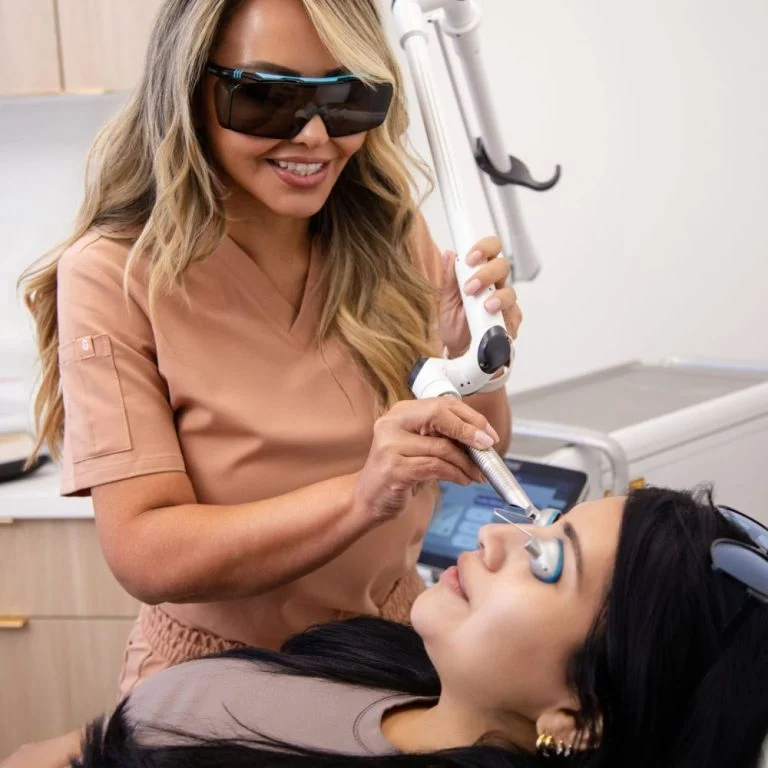
For many people, the first question is not whether lasers work. It is whether a specific laser treatment makes sense for their skin, their goals, and their tolerance for downtime. That matters because "laser treatment" is a broad label. Some devices target redness. Some tighten skin. Some resurface texture. Some stimulate collagen gradually over months. Fotona sits in an interesting category because it is not one single treatment with one single outcome. It is a laser platform used in different ways, often with different settings and protocols, to address concerns ranging from texture and fine lines to acne scars, laxity, pigmentation, and even certain functional or medical concerns depending on the practice.
If you are looking into Fotona Laser Treatments Encino, CA, the smartest place to start is not with before and after photos. It is with understanding what Fotona actually is, what it can realistically improve, what it cannot do well, and how to tell whether the person holding the handpiece knows how to tailor the treatment to your skin rather than pushing a one-size-fits-all package.
What Fotona actually refers to
Fotona is a brand known for laser systems that commonly use Er:YAG and Nd:YAG wavelengths. That technical detail sounds abstract until you see how it changes treatment planning. In practical terms, one wavelength may be used more for resurfacing and controlled ablation near the skin surface, while the other may be used to reach deeper tissue and stimulate tightening or target vascular concerns. Many clinics combine them in layered protocols.
That is why two people can both say they had a Fotona treatment and mean very different experiences. One may have had a light treatment with a day or two of pinkness and a subtle glow afterward. Another may have had a more aggressive resurfacing session with several days of visible healing. Another may have had nonablative tightening with heat but minimal peeling. The name alone does not tell you much unless you also know the protocol.
This is especially important for first-timers in Encino, where practices often market treatments under branded names or signature packages. Those names can sound polished, but Fotona Laser Treatments Encino, CA they do not replace a real explanation. Ask which Fotona mode is being used, whether the treatment is ablative or nonablative, how many passes are planned, and what endpoint the provider is looking for. Those questions usually separate a thoughtful consultation from a sales presentation.
Why people choose Fotona instead of another laser
The appeal is flexibility. A well-run Fotona practice can often customize treatment intensity more than patients expect. Someone with early skin laxity and little downtime tolerance may do well with a gentle collagen-stimulating series. Someone dealing with acne scars and rough texture may need a more intensive resurfacing approach. Someone else may want maintenance around the eyes or mouth rather than full-face treatment.
That flexibility can be a strength, but it can also create confusion. Patients sometimes hear "customizable" and assume it means universally safe or equally effective for every concern. It does not. A versatile platform still depends on diagnosis, energy settings, patient selection, and operator skill. It also depends on honesty. If your main concern is deep jowling or heavy lower-face sagging, a laser may improve skin quality and give a modest tightening effect, but it will not reproduce a surgical result. If your main issue is melasma, heat-based treatments require caution because excess heat can sometimes worsen pigment.
In experienced hands, Fotona can be a strong option for people who want measurable improvement without jumping straight to surgery or fully ablative resurfacing. The key phrase there is "in experienced hands."
The concerns Fotona may help with
Most first-timers in cosmetic practices ask about one of five things: fine lines, crepey texture, acne scars, enlarged pores, and loose-looking skin that feels less firm than it did a few years ago. Fotona is often used for those concerns, particularly when the goal is overall skin quality rather than a dramatic structural lift.
Around the eyes, patients often like treatments that soften crepiness without the commitment of a more invasive procedure. Around the mouth, treatment may help with smoker's lines or etched texture, though deeper lines usually need a broader plan and sometimes combination treatment. Acne scarring is more nuanced. Rolling scars, shallow boxcar scars, and textural irregularities may improve, but older, deeper, sharply defined scars usually respond best when lasers are part of a staged approach that may also include subcision, TCA CROSS, microneedling RF, fillers, or other methods.
Pigmentation deserves special mention. Some Fotona protocols can help with sun damage and uneven tone, but not all brown spots are the same. Freckles, lentigines, post-inflammatory discoloration, and melasma behave differently. A skilled provider will not promise "pigment removal" without identifying what kind of pigment they are treating.
What your consultation should feel like
A good consultation is usually more methodical than glamorous. The provider should ask about your medical history, recent sun exposure, active acne, cold sore history, isotretinoin use, tendency to scar, previous lasers, and whether your pigmentation worsens with heat. They should look at your skin in normal light, not just flattering office lighting. If they photograph you, that is a good sign. It suggests they are tracking outcomes rather than selling impressions.
They should also ask what bothers you most. This sounds obvious, but it gets missed all the time. A patient may come in asking for tightening and really mean they are frustrated by rough texture. Another may ask for resurfacing but actually hates diffuse redness. If the provider does not define the target, your treatment can be technically competent and still feel disappointing.
Watch for specific language. "You may need a series" is useful. "This will take ten years off" is not. "Expect improvement, not perfection" is the kind of sentence that often signals mature clinical judgment.
Downtime is where expectations often go wrong
Many first-timers focus on pain and forget to ask about social downtime. Pain matters, but downtime is what usually disrupts real life. Depending on the protocol, Fotona can involve anything from a flushed look for a day to several days of bronzing, swelling, grid-like texture, peeling, or visible resurfacing.
A common mistake is hearing "little to no downtime" and imagining you can attend an event the next morning under makeup. Maybe, but maybe not. Even a lighter treatment around the eyes can leave puffiness for a day or two. More intensive sessions can leave the skin dry, sandpapery, pink, or flaky. On thinner skin, especially around the lower eyelids and mouth, swelling can look more dramatic than patients expect, even when the response is normal.
If you have something important on your calendar, build in extra buffer time. In practice, people who schedule laser treatments at least one to two weeks before a major event are usually happier than those who try to squeeze them in right before photos, weddings, reunions, or business presentations.
How it feels during treatment
Sensation varies with the settings. Some Fotona treatments feel like quick snaps of heat. Others build warmth gradually. More aggressive resurfacing can feel quite intense without proper numbing or cooling support. When practices underplay this, patients lose trust fast.
Topical anesthetic is commonly used for resurfacing-focused sessions, though protocols vary. Around sensitive areas such as the upper lip or lower eyelids, even good numbing may not erase all discomfort. A well-prepared patient usually tolerates treatment much better than a surprised one. Expect warmth that lingers after the session. For a few hours, the skin may feel sunburned, tight, or prickly.
That does not mean something is wrong. It means you are having a real procedure, not a spa facial with a brighter name.
Not every skin tone should be treated the same way
This is one of the most important issues for first-timers and one of the easiest to gloss over in marketing. Skin tone affects risk, especially the risk of post-inflammatory hyperpigmentation. Darker or more reactive skin types can absolutely be treated with lasers, but technique matters more, and treatment parameters may need to be adjusted. Sometimes the better decision is to choose a different laser, a lower-energy plan, more spacing between sessions, or a different modality entirely.
If you have a history of dark marks after acne, waxing, burns, or irritation, say that early. If you are prone to melasma, say that too. Providers who work frequently with diverse skin tones usually ask these questions before you do. If they do not, treat that as useful information.
In Encino, where patients come in with a wide range of backgrounds and skin characteristics, experience with pigment-prone skin should not be considered a bonus. It should be part of basic competence.
The prep matters more than people think
Good outcomes start before the laser turns on. Skin that is recently tanned, sunburned, actively irritated, or over-exfoliated does not behave predictably. Patients often sabotage their own treatment unintentionally by using retinoids, exfoliating acids, Fotona Laser Treatments Encino, CA benzoyl peroxide, or home devices right up until the appointment because nobody gave them clear instructions.
A strong practice will tell you exactly what to stop, when to stop it, and when to resume. If you get cold sores around the mouth, you may need antiviral prophylaxis for treatments near the lips. If you are on photosensitizing medication, that should be reviewed. If you are prone to dermatitis, your barrier may need calming first.
Here are the practical prep questions worth asking before you book:
- What products should I stop using, and for how long?
- How much downtime should I plan for with my specific settings?
- What risks are most relevant for my skin tone and history?
- Will I need more than one session to see the result I want?
- What should I use for aftercare, and what should I avoid?
These are not fussy details. They directly affect healing and outcomes.
What aftercare usually looks like
Aftercare is rarely complicated, but it does require discipline. The skin generally needs gentleness, moisture, and strict sun protection. That means bland cleansers, non-irritating moisturizers, and broad-spectrum SPF used consistently. It also means resisting the urge to scrub off roughness or peeling skin. Patients who pick, over-cleanse, or stack actives too soon are the ones who often create problems that were avoidable.
Heat exposure matters after treatment too. Hard workouts, saunas, hot yoga, and long hot showers can intensify inflammation when your skin is trying to settle. This is one reason Fridays are popular treatment days, but the reality is not everyone should treat on a Friday if their weekend plans involve hiking, pools, beach time, or outdoor sports.
The first week often determines whether healing looks smooth or chaotic. Follow the instructions you were given, not the advice from a friend who had "a laser" once.
Results are usually progressive, not instant
This is another place where first-timers get tripped up. Some changes can be seen early. Skin may look smoother, brighter, or more refined once the initial dryness passes. But collagen remodeling takes time. Tightening effects, texture changes, and scar softening often unfold gradually over weeks to months.
That can feel underwhelming if you expected a dramatic overnight shift. It can also be encouraging, because subtle improvements tend to look natural. People may say you look rested or polished without knowing why. For many patients, that is the sweet spot.
For concerns like acne scarring or deeper wrinkling, one session is rarely the whole story. Depending on intensity, goals, and recovery tolerance, a provider may recommend a series of lighter treatments or a smaller number of more aggressive ones. Neither approach is automatically better. It depends on your skin, schedule, and appetite for downtime.
Cost is not just the price of the session
Prices in Encino vary widely based on the area treated, the protocol, the provider's training, and whether the treatment is bundled into a series. A low quote is not always a bargain if it buys overly conservative settings that barely move the needle, or a rushed appointment with minimal assessment. A high quote is not automatically justified either.
The more useful question is value. What are you getting for the fee? Does it include consultation, photos, numbing, follow-up, post-care products, or touch-up assessment? Are you paying for a physician's expertise, or is the treatment delegated without clear supervision? What happens if you need adjustments after your first session?
Patients tend to do best when they budget for the full plan instead of one treatment in isolation. If your real goal will take three sessions, the single-session price is not the number that matters.
How Fotona compares with alternatives
Not every concern needs a laser, and not every laser concern is best served by Fotona. For laxity, ultrasound or radiofrequency-based devices may be part of the conversation. For redness, vascular lasers may be more direct. For pigment, certain pigment-specific lasers or peels may make more sense. For deep acne scars, mechanical release methods may need to come first. For volume loss, fillers or biostimulators may address the issue more accurately than resurfacing.
This is where a lot of disappointment begins. Patients often try to make one tool solve every problem. Skilled providers do not do that. They match the treatment to the primary problem, then layer thoughtfully if needed.
That does not diminish Fotona. It just puts it in the right place. It is often a strong option for skin quality, texture refinement, moderate tightening, and certain resurfacing goals. It is less compelling when the concern is mostly structural, mostly pigment-driven in a heat-sensitive patient, or outside the strengths of the chosen protocol.
Red flags during your search in Encino
The market for aesthetic treatments is crowded, and a polished website can hide thin experience. A few warning signs come up repeatedly. One is vague language. If a practice cannot clearly explain which Fotona treatment they recommend and why, that is a problem. Another is universal promises. No laser is ideal for everyone.
A third red flag is before and after photography that looks inconsistent in lighting, makeup, angle, or facial expression. Another is an office that talks more about package pricing than candidacy. Finally, be wary when the consultation skips risk discussion. Every meaningful laser treatment has trade-offs. A practice that never mentions them is not being thorough.
A more reassuring office tends to be calm, specific, and willing to say no. If they tell you your expectation is unrealistic, or that another treatment would fit you better, that is often a sign you are in better hands.
A sensible way to decide if you are a good candidate
Most first-timers do well by narrowing the decision to a few practical issues rather than chasing hype. Ask yourself the following:
- Is my main concern one that Fotona commonly improves, such as texture, fine lines, mild laxity, or certain scars?
- Am I willing to accept the amount of downtime tied to the settings I actually need?
- Does the provider have experience with my skin type and my specific concern?
- Am I comfortable with gradual improvement, or am I expecting one treatment to do too much?
- Do I understand the aftercare well enough to follow it properly?
If you can answer yes to most of those, you are starting from a grounded place.
What first-timers often wish they had known
Patients frequently say they wish they had understood the difference between redness and damage. Some expect bright pink skin the next day and panic, while others expect no visible healing and are startled by roughness and swelling. Many underestimate sun avoidance. They hear "wear sunscreen" and do not realize that diligent hat use, shade, and avoiding prolonged midday exposure may matter just as much during healing.
Another common regret is doing too much too soon afterward. The skin feels tight, so they exfoliate. It looks dull, so they add acids. It seems healed, so they restart tretinoin immediately. That impulse is understandable and often counterproductive.
The happiest patients tend to be the ones who approach treatment like a medical procedure with aesthetic benefits, not a beauty errand. They ask thoughtful questions, prepare properly, clear their schedule, and give the skin time to remodel.
The bottom line for anyone considering Fotona Laser Treatments Encino, CA
If you are considering Fotona Laser Treatments Encino, CA, the most useful thing you can do is shift your focus from branding to fit. Fotona can be an excellent tool, especially for texture, fine lines, scar refinement, and moderate tightening when treatment is selected carefully. It can also be oversold, underspecified, or used on the wrong patient for the wrong goal.
A good first experience usually comes down to four things: a precise diagnosis, realistic expectations, appropriate settings for your skin, and disciplined aftercare. When those pieces are in place, results can be genuinely satisfying and natural-looking. When they are not, even a premium device will not rescue poor judgment.
For first-timers, that is the real lesson. The machine matters. The plan matters more.
OMNIA Wellness Center
Address: 16430 Ventura Blvd Ste 207, Encino, CA 91436
Phone number: +18183868511
FAQ About Fotona Laser Treatments Encino, CA
What is a Fotona laser good for?
A Fotona Laser system is a versatile, dual-wavelength medical laser used primarily for non-surgical skin tightening, anti-aging rejuvenation, and dermatological treatments.
How much does the Fotona laser cost?
The cost of a Fotona laser depends heavily on whether you are looking to purchase a laser machine for a medical practice or are a patient seeking a laser treatment at a medspa.
Is a Fotona laser worth it?
A Fotona laser treatment is generally worth it if you want non-surgical skin tightening, improved texture, and collagen stimulation with very little downtime.